
2021 editions of healthcare hygiene magazine
Explore the December 2021 Edition
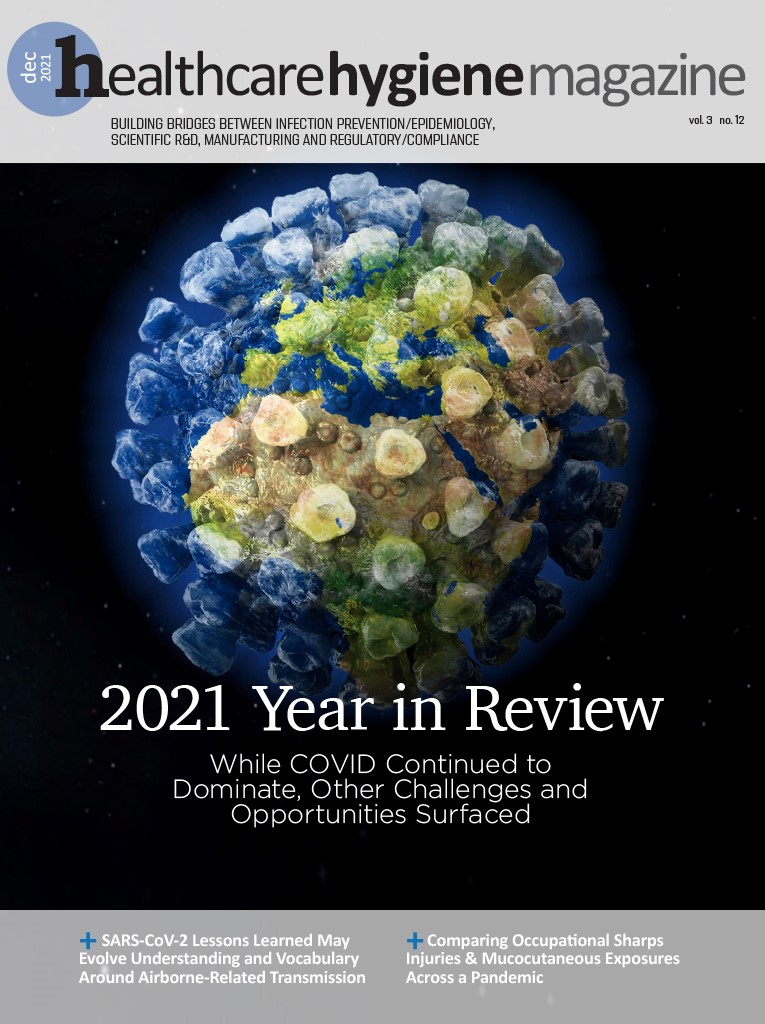
As we look back at the major events of the past year, COVID continued its grip on the world and dominated the infection prevention, healthcare epidemiology and public health agendas. Also continuing its stance against the pandemic were infection preventionists (IPs), and Rebmann, et al. (2021) provided a peek into focus groups held to elicit IPs’ experiences early during the COVID-19 pandemic. These IPs described multiple challenges, including rapidly changing and conflicting guidance, a lack of infection prevention recommendations for nonacute-care settings, insufficient personal protective equipment, healthcare personnel complacency with personal protective equipment and infection prevention protocols, and increases in healthcare-associated infections (HAIs) and workload.
Explore the November 2021 Edition
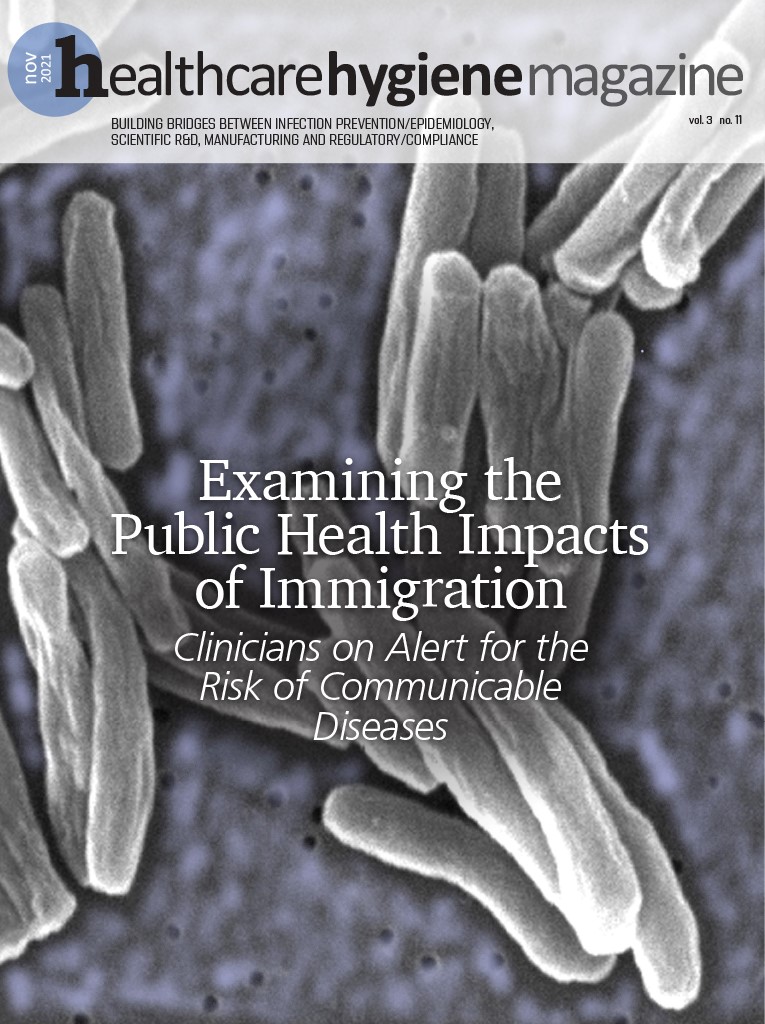
Balancing the provision of healthcare to evacuees, immigrants, refugees with protecting U.S. citizens from communicable diseases is a critical public health imperative right now, as the influx of foreign-born individuals is reaching significant numbers in a short period of time under the current administration. As Dallas, et al. (2018) emphasize, “considering the U.S. border in terms of the interaction of health protection of both migrant and current resident populations could then reasonably be identified as a critical policy issue touching public health in America today.”
The Migration Data Portal observes, “The relationship between migration and health is complex, and its impact varies considerably across migrant groups, and from person to person within such groups. Conditions surrounding the migration process may exacerbate health vulnerabilities and risk behaviors such as the case of a victim of sex trafficking through transnational networks. Conversely, it can be an enabler for achieving better health trajectories, such as the case of a newly arrived refugee as part of a humanitarian settlement program accessing treatment for a chronic disease. Due to the lack of legal status, stigma, discrimination, language, cultural barriers and low-income levels, irregular migrants may be excluded from accessing primary healthcare services, vaccination campaigns and health-promotion interventions.”
Explore the October 2021 Edition
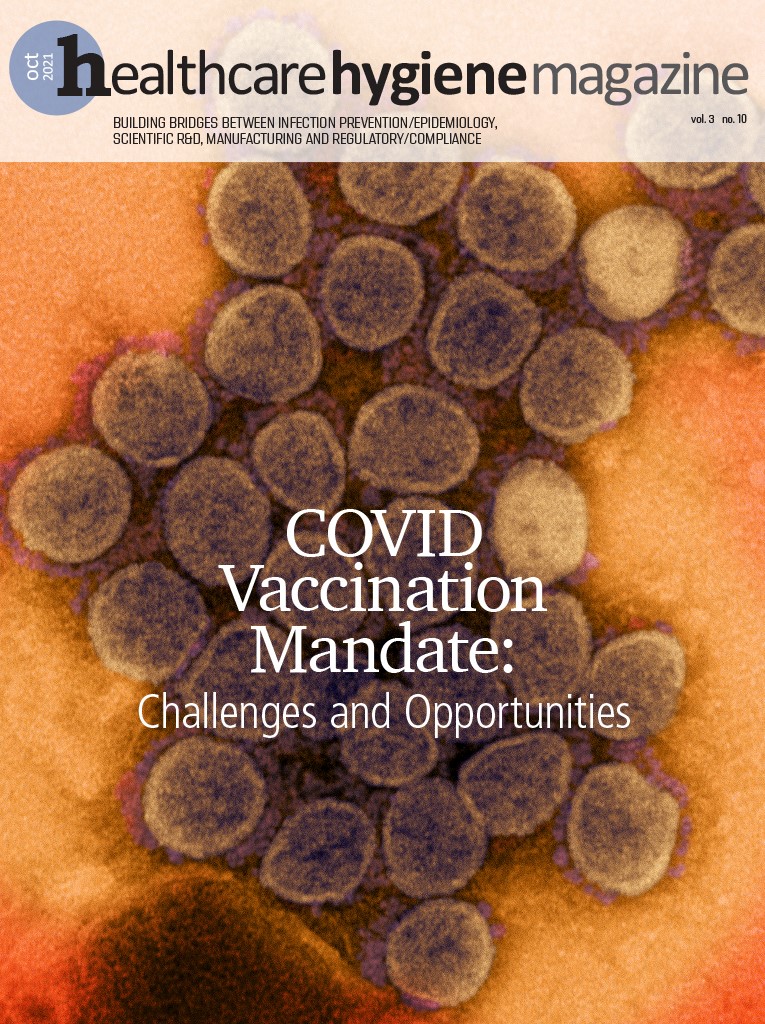
UAs the healthcare sector mirrors the public sector and moves toward mandatory COVID-19 vaccination as a condition for employment, vaccine hesitancy among healthcare workers – and members of the public – remains, and the country continues to be divided based on duty to care versus the pursuit of civil liberties-driven personal choice and persistent concerns around long-term effects and adverse events.
A recent Qualtrics survey reveals the growing chasm among Americans over vaccine mandates, with 40 percent of adults surveyed still unsure about or not planning to get a COVID-19 vaccine. The top five reasons included safety at 91 percent; concern about side effects at 90 percent; lack of efficacy at 65 percent; contracting COVID-19 from the vaccine at 61 percent; and the confidence that illness/disease is unlikely at 43 percent. The Qualtrics survey also found that 44 percent of workers said they would consider leaving their jobs if they were forced to get vaccinated; conversely, around 38 percent of workers would consider leaving their current employer if the organization did not enact a vaccine mandate.
Explore the September 2021 Edition
The COVID-19 pandemic revealed not only the significant gaps in healthcare and public health preparedness and supply-chain weaknesses, but also the vulnerability to believing what an international team of scientists is calling false dichotomies about SARS-CoV-2 — claims or positions erroneously presented as just two simplistic and polarized options, without any nuances or shades of grey in between.
In a recent paper, Escandón, et al. (2021) identify three trade-offs that exist at the interface of science and policy related to this pandemic: clarity-complexity (simple messages vs. conveying uncertainty), speed-quality (timely responses vs. in-depth quality assessment), and data-assumption (data availability vs. required set of assumptions). When examining contentious topics, these experts make the case for a nuanced understanding of COVID-19 science, identify insights relevant to effective pandemic responses, and highlight important research gaps. (Editor’s note: the authors did not consider vaccination in full due to the timing of the paper’s publication; a second limitation of their work is that most of the information and references preceded the Delta variant’s arrival.)
Explore the August 2021 Edition
One of the truisms of healthcare is that personnel, attire, surfaces and objects are contaminated with microorganisms and that transmission is probable. Debate over the infectious threat posed by healthcare attire (both surgical but primarily non-surgical) is ongoing. Optics dictate that healthcare professionals do not wear scrub uniforms or similar pieces of healthcare attire on the street — now more than ever before in the immediate and lingering stages of COVID-19 — to not telegraph a rampant disregard for the health and welfare of the general public. As Mitchell, et al. (2015) observe, “Healthcare workers often travel to and from healthcare facilities by public transportation wearing their work clothing, creating another route by which microorganisms can be imported into, and exported from, the healthcare environment.”
Explore the July 2021 Edition
The COVID-19 pandemic heightened awareness of the need for rigorous infection prevention measures throughout the healthcare institution, but one ubiquitous and potential fomite in this setting is the healthcare textile, a broad category encompassing linens, healthcare personnel attire, and to some extent, soft surfaces. It is currently assumed there is little infection risk from textiles overall due to a lack of direct epidemiological evidence. As Owen and Laird (2020) observe from their review of the medical literature, “There are no large-scale epidemiological studies demonstrating a direct link between healthcare-acquired infections (HAIs) and contaminated textiles yet evidence of outbreaks from published case studies should not be disregarded. Adequate microbial decontamination of linen and infection control procedures during laundering are required to minimize the risk of infection from healthcare textiles.”
Explore the June 2021 Edition
As the country emerges cautiously from the COVID-19 pandemic, healthcare facilities are assessing the damage, endeavoring to apply wisdom from lessons learned, and bolstering readiness for the next crisis.
The 2021 Environmental Scan from the American Hospital Association indicated that the top concerns for healthcare leadership concerns, based on surveys of hospital and health system leaders in May 2020, include loss of revenue, overall financial stability, supply chain risk, staff getting sick, and furloughing staff (Source: “Evolving U.S. Healthcare Needs and Attitudes During COVID-19,” Sage Growth Partners, June 30, 2020). From the nurse leadership perspective, top challenges during the pandemic as of July 2020 were communicating and implementing changing policies; surge staffing, training and reallocation; emotional health and well-being of staff; and access to personal protective equipment (PPE) and other supplies (Source: “Nursing Leadership COVID-19 Survey Key Findings,” American Organization for Nursing Leadership and Joslin Marketing, Aug. 4, 2020).
Explore the May 2021 Edition
This year’s World Health Organization (WHO) SAVE LIVES: Clean Your Hands campaign focuses on achieving appropriate hand hygiene action at the point of care (POC), an element of WHO’s patient safety strategies during healthcare delivery for many years but is now more critical than ever in the face of the lingering COVID-19 pandemic. The WHO campaign calls to action key stakeholders who can play critical roles in achieving optimal hand hygiene at the point of care, in both the current situation and a broader sense, helping to strengthen society involvement as promoted by the Hand Hygiene for All initiative.
As Allegranzi, et al. (2021) explain, “The first prerequisite for effective implementation of hand hygiene action at the point of care is ‘system change,’ meaning that the appropriate infrastructure and supplies should be available at the point of care so that health workers can clean their hands promptly when needed. This requires reliable and uninterrupted provision of good-quality alcohol-based handrub (ABHR), supplies of clean water, soap, single-use towels and an adequate number of functioning sinks. (WHO, 2019) Although effective infection prevention and control (IP&C) programs in healthcare facilities should meet WHO minimum requirements, the 2020 global WASH report (2020) revealed that 1 in 3 facilities do not have adequate hand hygiene stations at the point of care.”
Explore the April 2021 Edition
At the one-year mark of the pandemic, we are beginning to get a better sense of the impact of COVID-19 on U.S. healthcare facilities from a data perspective. Sapiano and Dudeck (2021) report time-series estimates of the critical hospital capacity indicators from April 1 to July 14, 2020 using data from the CDC’s National Healthcare Safety Network (NHSN)’s module for collecting hospital COVID-19 data. The investigators say that NHSN hospital capacity estimates served as important indicators of the pandemic’s magnitude, spread and impact, providing quantitative guidance for the public health response.
The researchers found that during the pandemic’s April peak in the U.S., among an estimated 431,000 total inpatients, 84,000 (19 percent) had COVID-19. Although the number of inpatients with COVID-19 decreased from April to July, the proportion of occupied inpatient beds increased steadily. COVID-19 hospitalizations increased from mid-June in the South and Southwest regions after stay-at-home restrictions were eased. The proportion of inpatients with COVID-19 on ventilators decreased from April to July.
Explore the March 2021 Edition
Healthcare personnel (HCP) on the frontlines are modern-day warriors against illness and infection, and as Bielicki, et al. (2020) remind us during the pandemic, “The risk profile for SARS-CoV-2 exposure and infection among healthcare workers differs substantially from other groups. In designated COVID-19 wards or hospitals, healthcare workers are at high risk of infection. Potential exposure to SARS-CoV-2 is inherent to their work and is prevented only by excellent adherence to all IP&C measures, including the use of appropriate PPE. There is uncertainty about what is optimal PPE, but it is clear that standardized and rigorous application of PPE and other IPC measures can dramatically reduce nosocomial transmissions.”
Explore the February 2021 Edition
The COVID-19 pandemic has triggered a tidal wave of information, and coupled with open-access, immediate repositories of data, this abundance of evidence is overwhelming clinicians who are struggling to translate this critical mass into meaningful and effective patient care.
As Metlay and Armstrong (2021) acknowledge, “Among the many extraordinary aspects of the coronavirus disease 2019 (COVID-19) pandemic, the rapidity with which new scientific information has been shared and incorporated into clinical decision making is almost unprecedented. Undoubtedly, rapid incorporation of new scientific information into preventive and therapeutic strategies has been critical in minimizing the morbidity and mortality of this illness. At the same time, the rapid spread of new data has created the potential for premature implementation of new evidence to have widespread negative effects on decisions at the individual patient and health system levels. At the core of this dilemma is an understanding of how much certainty we require for new information to be adopted and change practice.” The researchers add, “Uncertainty in medicine is a fact of life.”
Explore the January 2021 Edition
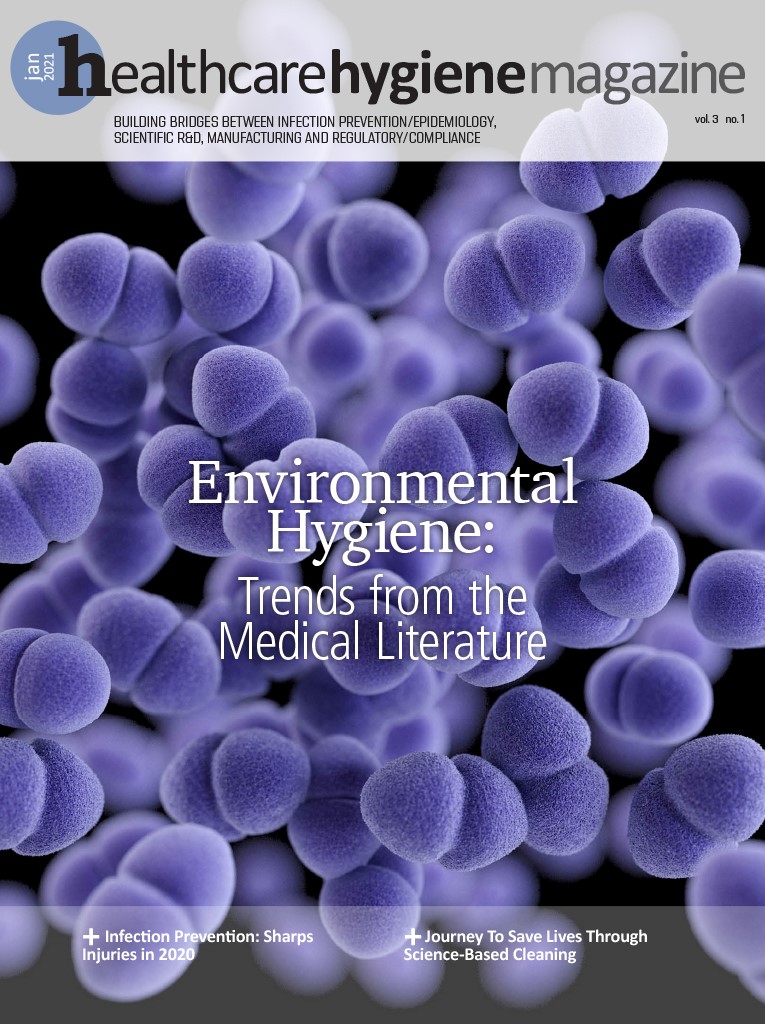
Environmental hygiene is more critical than ever before as healthcare facilities continue to battle COVID-19 transmission. As Fakih, et al. (2020) remind us, “The approach to curbing further transmission of COVID-19 within communities focuses on the institution of measures to detect and isolate those infected, to practice point source control, to reduce environmental contamination, and to optimize engineering controls … Environmental cleaning reduces the chance for persons to contact contaminated surfaces, and engineering control through deploying spatial separation and reducing crowding will lessen the chances of exposure to the pathogen.”