
2022 Editions of Healthcare Hygiene magazine
Explore the December 2022 Edition
Use this This year’s IDWeek meeting presented numerous opportunities to review how the pandemic has impacted hospital pathogens, healthcare-associated infections (HAIs), and antimicrobial stewardship efforts. We present highlights of some of the more pertinent presentations.
Updated recommendations on how to prevent central line-associated bloodstream infections (CLABSIs), as well as ventilator-associated pneumonia, ventilator-associated events (VAEs), and non-ventilator healthcare-associated pneumonia (NV-HAP) were recently published as part of the updates to the infection prevention resource known as the SHEA/IDSA/APIC Compendium of Strategies to Prevent Healthcare-Associated Infections in Acute Care Hospitals. The Compendium provides practical recommendations for preventing healthcare associated infections (HAIs) that have major impacts on the quality and safety of patient care.
Explore the November 2022 Edition
Following a mild flu season in 2021-2022, due in part to the COVID-19 pandemic, public health experts and hospital epidemiologists are cautioning against complacency regarding a potentially severe influenza season for 2022-23. Last month, the National Foundation for Infectious Diseases (NFID) warned that despite an aggressive respiratory season ahead, about half of all U.S. adults plan to get a flu vaccine during the upcoming flu season.
CDC director Rochelle P. Walensky, MD, MPH, is encouraging the public to prioritize vaccination. In a statement, Walensky noted, “Last flu season, 49 percent of adults received their flu vaccine—with adults aged 65 years and older leading in flu vaccine coverage,” she said, citing new CDC data. “With a potentially challenging flu season ahead, I urge everyone to protect themselves and their families from flu and its potentially serious complications. Schedule your flu vaccine today.”
Explore the October 2022 Edition
While classic elements of occupational health remain vital, one related issue is pushing itself to the forefront due in part to the pandemic: healthcare professional wellbeing.
By some estimates, the healthcare sector stands to lose one-third of its workforce due to burnout as well as moral distress and injury triggered by pre-existing factors that were exacerbated by the pandemic. For example, the American Hospital Association (AHA, 2022) warns that 22 percent of nurses may leave their current position providing direct patient care within the next year. According to these nurses, the top three factors influencing the decision to leave are insufficient staffing levels, demanding nature/intensity of workload, and the emotional toll of the job. More than 60 percent of physicians say they experience frequent, severe burnout. The AHA (2022) also reports that 62 percent of healthcare professionals say that worry or stress related to the pandemic has a negative impact on their mental health.
Explore the September 2022 Edition
Recently updated guidance from five medical organizations highlights practice recommendations for the prevention of central line-associated bloodstream infections (CLABSIs) at a time when hospitals urgently need to strengthen infection prevention programs. The CLABSI prevention guide is the first to be published in a series of seven evidence-based practice recommendation guides for acute-care hospitals on the prevention of healthcare-associated infections (HAIs).
The Compendium of Strategies to Prevent Healthcare-Associated Infections in Acute Care Hospitals: 2022 Updates was issued under the leadership of the Society for Healthcare Epidemiology of America (SHEA) in partnership with the Infectious Diseases Society of America (IDSA), the Association for Professionals in Infection Control and Epidemiology (APIC), the American Hospital Association (AHA), and The Joint Commission, with representatives from the Centers for Disease Control and Prevention (CDC), the Pediatric Infectious Diseases Society (PIDS), and other organizations with content expertise. The Compendium: 2022 Update is the third iteration of the Compendium, which was originally published in 2008 and revised in 2014.
Explore the August 2022 Edition
Even as the healthcare sector begins to expand its former laser focus on respiratory infections only due to the COVID-19 pandemic, recently released data indicate the need to keep sharp object injuries and blood and body fluid exposures from falling off the collective radar.
Ensuring the occupational health of caregivers is part of the Centers for Disease Control and Prevention (CDC)’s Core Infection Prevention and Control Practices for Safe Healthcare Delivery in All Settings. These recommendations of the Healthcare Infection Control Practices Advisory Committee (HICPAC) call for ensuring that healthcare personnel either receive immunizations or have documented evidence of immunity against vaccine-preventable diseases; implement processes and sick leave policies to encourage healthcare personnel to stay home when they develop signs or symptoms of acute infectious illness; and implementing a system for healthcare personnel to report signs, symptoms, and diagnosed illnesses that may represent a risk to their patients and coworkers. It also recommends adherence to “federal and state standards and directives applicable to protecting healthcare workers against transmission of infectious agents, including OSHA’s Bloodborne Pathogens Standard, Personal Protective Equipment Standard, Respiratory Protection standard and TB compliance directive.”
Explore the July 2022 Edition
The clinical microbiology laboratory (CML) plays a critical role in the surveillance, treatment, prevention and control of healthcare-acquired infections (HAI), working alongside infection preventionists and healthcare epidemiologists. The major importance of medical microbiology is that it helps in the identification, isolation, diagnosis, and treatment of pathogenic microorganisms.
For example, the diagnosis of bloodstream infections (BSIs) is one of the most critical functions of CMLs. But they also help establish an etiologic diagnosis of infections within the central nervous system, such as meningitis and encephalitis; soft tissue infections; upper and lower respiratory tract bacterial and fungal infections, including hospital-acquired and ventilator-associated pneumonias; gastrointestinal infections; bone and joint infections; urinary tract infections, including catheter-associated urinary tract infections (CAUTIs); genital infections; viral syndromes, and others.
Explore the June 2022 Edition
As the Association for Professionals in Infection Control and Epidemiology (APIC) celebrates a half century of protecting patients and healthcare personnel through the efforts of infection prevention and control (IP&C) and risk management, we examine the journey of the field and the profession as it evolves and impacts the entirety of the healthcare landscape.
In 1970, the Centers for Disease Control and Prevention (CDC) established the National Nosocomial Infections Surveillance (NNIS) System, now known as the National Healthcare Safety Network (NHSN), which is used to report and track healthcare-acquired infections (HAIs). It created the bedrock upon which modern public health efforts were built. With epidemiological structures beginning to take shape, nurse epidemiologists and infection control nurses began to outline the beginnings of what would eventually become the infection preventionist (IP) profession in the early 1970s. APIC was founded in 1972 by a small group, led by pioneers such as Carol DeMille, Pat Lynch, Kay Wenzel, and other visionaries.
Explore the May 2022 Edition
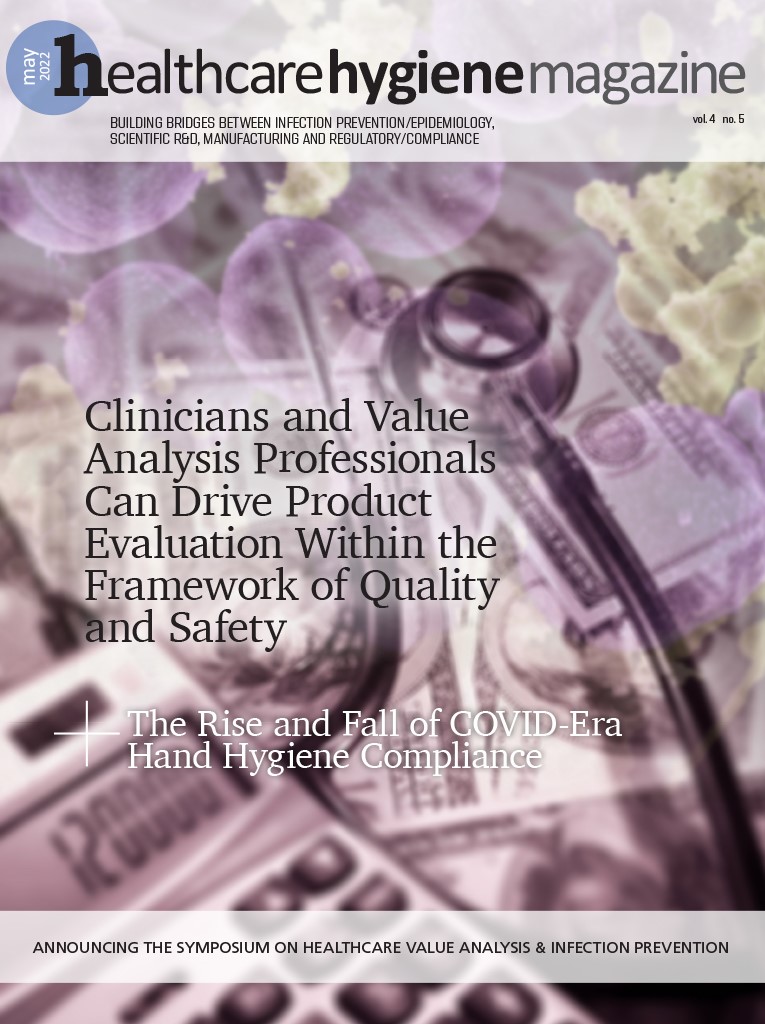
Approaching product evaluation and purchasing through the lens of infection prevention is becoming more common as healthcare value analysis professionals work to help realize clinically driven goals around optimal patient outcomes.
Premier (2020) defines value analysis as “an evidence-based process for healthcare organizations to obtain supplies, services, and equipment. Value analysis drives quality care delivery, safety and outcomes, and factors in total cost.”
This aligns with how the Association for Healthcare Value Analysis Professionals (AHVAP) defines it: “Healthcare value analysis contributes to optimal patient outcomes through an evidenced-based systematic approach to review healthcare products, equipment, technology, and services. Using recognized best practices, and in collaboration with organizational resources, value analysis evaluates appropriate utilization, clinical efficacy, and safety issues for the greatest financial value.”
Explore the April 2022 Edition
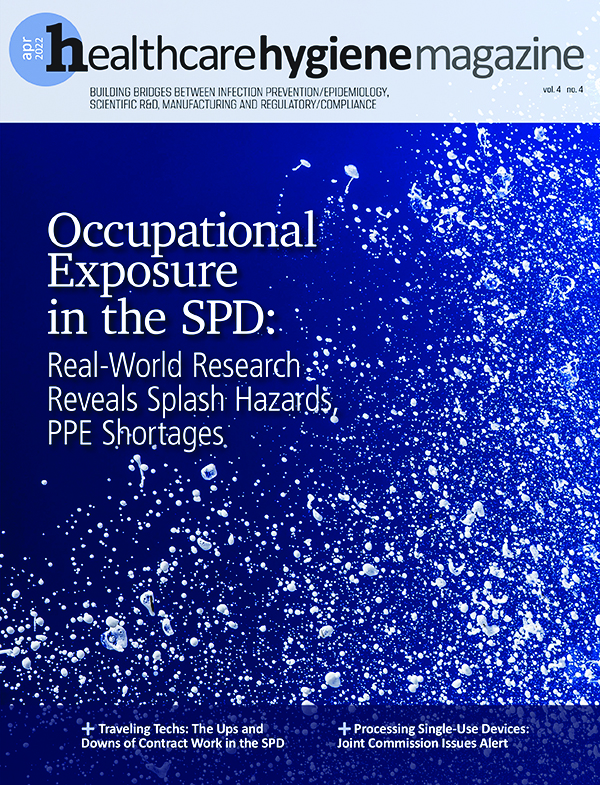
Confirming that sterile processing department (SPD) personnel are routinely doused with potentially infectious material during routine decontamination tasks, a team of researchers is drawing attention to the lack of research around this occupational exposure, highlighting the fallacy of the 3-foot droplet dispersal standard, and pushing for better personal protective equipment (PPE) in this barrier protection-depleted time due to COVID-driven shortages.
Researchers Cori Ofstead, president and CEO of Ofstead & Associates, and her colleagues conducted a pilot project to identify reprocessing activities that generate splashes, determine how far droplets can travel in decontamination areas, and assess PPE exposure during routine activities. The team says that the effectiveness of protective measures for sterile reprocessing personnel has not yet been systematically evaluated in real-world settings and were surprised and dismayed by the lack of evidence on this topic despite the known risks around decontamination and reprocessing activities in the SPD.
Explore the March 2022 Edition
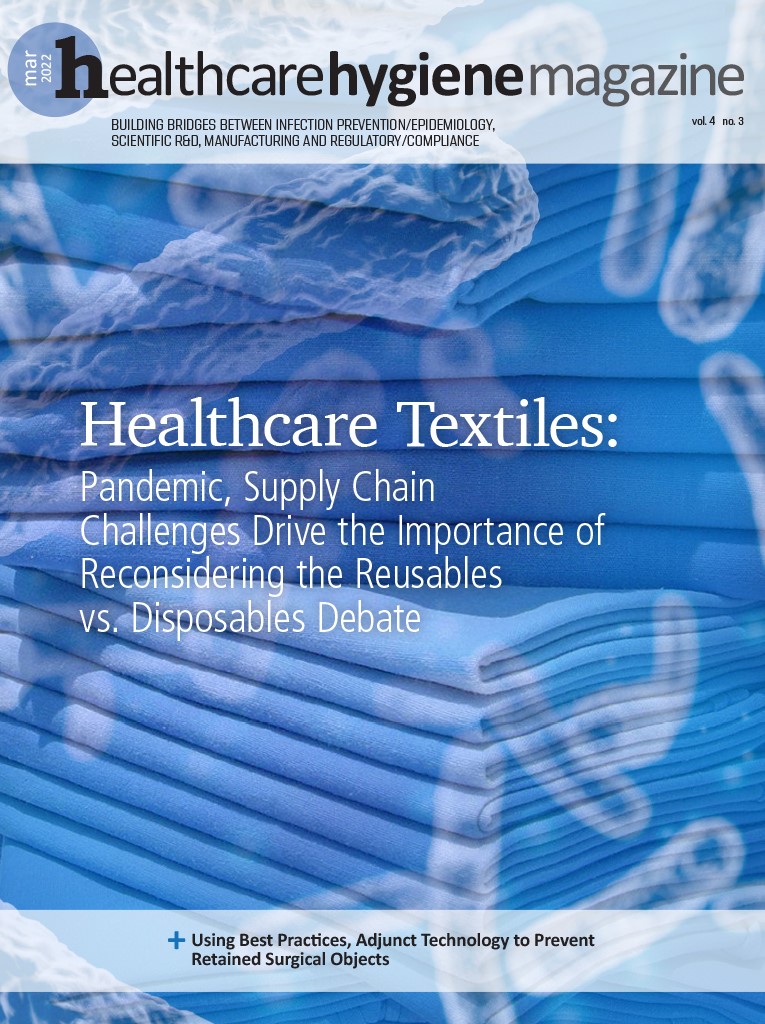
The shortage of personal protective equipment (PPE) and other key medical commodities during the earlier stages of the pandemic are causing healthcare systems to rethink their place in the supply chain when it is disrupted or depleted. Contracting with vendors with adequate manufacturing capacities and suitable logistics, as well as domestic suppliers, can help shore up critical supply repositories.
In its analysis of the impact of the pandemic in general and sustainability efforts specifically, Practice Greenhealth (2021) characterized 2020 as the theoretical “canary in the coal mine” for the healthcare supply chain, which “grappled with incredible upheaval as global suppliers shut down at the onset of the pandemic. The extraordinary and sudden demand for PPE combined with the overdependence on imported PPE left the U.S. healthcare sector competing with itself, fighting internally for limited stockpiles of PPE and international supply.”
Explore the February 2022 Edition
COVID-19 supply chain shortages and other PPE- and device-related risks are part of independent non-profit organization ECRI’s annual Top 10 Health Technology Hazards for 2022.
ECRI’s report, now in its 15th year, identifies health technology concerns that warrant attention by healthcare leaders. ECRI’s team of biomedical engineers, clinicians, and healthcare management experts follows a rigorous review process to select topics for the annual list, drawing insight from incident investigations, reporting databases, and independent medical device testing.
Explore the January 2022 Edition
Despite scientific evidence on how to properly prescribe antibiotics, clinicians routinely diverge from these processes in their actual practices, and implementation science principles can inform stewardship efforts to ensure the appropriate use of antibiotics, according to new research.
“This evidence-practice gap contributes to the public health crisis of antibiotic resistance which leads to 23,000 preventable deaths each year,” says lead author Daniel Livorsi, MD, MSc, assistant professor of medicine at the University of Iowa Carver College of Medicine and Medical Director of Antimicrobial Stewardship at the Iowa City Veterans Administration Medical Center. “We believe that reframing antibiotic stewardship strategies as implementation strategies will demonstrate how the fields intersect and will encourage researchers to bring the same rigor to research on stewardship strategies as is applied to implementation strategies.”