

Public Health
Childhood Measles Vaccination Rates Fall Worldwide Post COVID-19
Oct. 25, 2026
Routine vaccine program disruptions and under-resourced health systems are driving a global decline in childhood measles vaccination rates post COVID-19, a study has found.
University of Queensland researchers examined measles cases, deaths and vaccine gaps in children under 5 across 204 countries and territories from 1990 to 2023, finding estimated cases rose 40 percent from 11.1 million in 2019 to 15.6 million in 2023.
Associate professor Benn Sartorius, from UQ’s Frazer Institute, said childhood measles immunization rates have been going backwards since COVID-19: “This has contributed to a global resurgence of measles in young children. It backtracks on decades of progress, where a nearly 80 per cent decline in measles cases was recorded worldwide between 1990-2019. The resurgence coincides with COVID-19 related disruptions to immunization programs, health systems, and funding – reflecting both the fragility of measles control and vulnerability of children in lower-resourced areas.zOur study shows urgent action is needed to restore routine immunization programs and build resilient health systems capable of sustaining high coverage during global crisis.”
Measles is a preventable, yet highly contagious airborne virus that can lead to complications and death, especially in young children.
The World Health Organization estimates one case can generate up to 18 secondary infections where immunity is low.
A study published in Lancet Global Health in 2023 estimated measles were fatal in as many as 3 out of every 100 infected infants under 1 years of age in 2019 across low and middle-income countries.
Sartorius said two doses of the measles vaccination in childhood was the most effective way to prevent the disease and was estimated to have prevented nearly 59 million deaths between 2000 and 2024. However, an estimated 23.7 million infants – or 1 in 5 – missed their first dose in 2023.
“Sub-Saharan Africa – which recorded the highest mortality rate throughout the study period – accounted for 50 percent of these missed doses, followed by South Asia at 20 percent,” Sartorius said. “The greatest burden occurs in lower-resourced settings, yet recent outbreaks in the United States show measles can remerge in high-income countries where immunity gaps develop.”
Vaccine coverage of Measles, Mumps and Rubella (MMR) fell from 95 percent to 92 percent in kindergartens across the United States.
“We have also seen a rise in misinformation in pockets of populations post COVID-19, and the United States has not helped with this narrative,” Sartorius said.
Despite COVID-19 disruptions, the study found Australasia maintained some of the highest measles vaccination coverage in the world. Between 1990-2019, Australasia recorded one of the largest increases in second-dose measles vaccination coverage, and by 2023 had the highest coverage of any region – with an estimated 96 per cent of children under 5 receiving their second dose of vaccine.
Sartorius said the data could help authorities identify under-vaccinated populations to prevent future outbreaks.
“We hope the data from our study will be used to target catch-up vaccination efforts and strengthen immunization where support is needed most.”
Researchers used data from the Global Burden of Diseases, Injuries, and Risk Factors (GBD) Study 2023.
Tracking “Infection Age” Helps Health Insurers Forecast the Cost of an Epidemic
Oct. 25, 2026
The COVID-19 pandemic exposed a fundamental weakness in how health insurers prepare for the future. Actuaries conventionally set aside reserves by looking at past claims, assuming that individual illnesses are largely independent of one another and that claim patterns change slowly. During an epidemic, none of these assumptions hold: one person’s infection drives the next, case numbers can surge within weeks, and the cost of treating a patient climbs steeply as the illness moves from initial diagnosis to hospitalization and intensive care.
In a study published in the journal Risk Sciences, researchers from Tsinghua University, Meta and Middle Tennessee State University propose a new way to bridge this gap. Their framework introduces “infection age”, the time elapsed since a person became infected, as a central variable that shapes both how infectious an individual is and how much their care is likely to cost.
“Policyholders with different infection ages will produce different medical claims,” explains corresponding author Runhuan Feng, a professor at Tsinghua University’s School of Economics and Management. “The concept of infection age introduces heterogeneity in individual infectivity into the population, and at a micro level this is highly useful for actuaries performing loss reserving.”
The team borrowed a familiar tool from property and casualty insurance: the loss triangle, a table that organizes claims by when they occurred and how they develop over time. By building an “infection triangle” that records how disease unfolds across cohorts of newly infected policyholders, and a companion “payment triangle” that converts this into projected medical costs, the researchers created a structure that aligns the epidemiological timeline with the actuarial one. This makes it possible to estimate the healthcare liabilities of individuals who are already infected but still require ongoing treatment, a quantity the authors term “infected but not removed”.
A key finding is that epidemiological quantities, in particular the effective reproduction number, directly shape how reserves evolve, whether premiums are adequate, and what the ultimate cost ratio will be. Reserve levels can rise rapidly during the growth phase of an outbreak and then stabilize or decline as infections fall, a pattern that differs markedly from traditional insurance products. The analysis also shows that late-stage, severe cases requiring hospitalization or intensive care dominate total liabilities, even though early-stage cases account for much of the claim frequency.
Using a numerical illustration inspired by COVID-19 dynamics, the authors demonstrate how the framework can be used for stress testing, allowing insurers to see how changes in transmission intensity or treatment severity feed through to reserve requirements.
“Our work establishes a formal linkage between epidemiological modelling and financial risk quantification,” says Feng. “Sudden shifts in the reproduction number, which are already monitored closely by public health surveillance systems, could trigger parametric catastrophe insurance or signal the need for reinsurance. We hope this gives insurers, public health institutions and regulators a systematic way to bring real-time outbreak data into reserve estimation and strengthen the financial resilience of healthcare systems during global health emergencies.”
The authors note that the current illustration uses synthetic data and a simplified setting, and that future work could calibrate the framework to real-world epidemic surveillance and insurance claims records as such information becomes available.
APIC and SHEA Issue Statement on Reported Erosion of CDC Capacity
Sept. 29, 2026
The Association for Professionals in Infection Control and Epidemiology (APIC) and the Society for Healthcare Epidemiology of America (SHEA) issued the following statement in response to The New York Times report on staffing losses and operational strain at the Centers for Disease Control and Prevention:
“Every day, infection preventionists and healthcare epidemiologists in hospitals, nursing homes, and outpatient clinics rely on the CDC’s science, surveillance, and guidance to keep patients and healthcare personnel safe. The reporting that the agency has lost nearly a third of its workforce, including experienced scientists in its emerging infectious disease and respiratory disease centers, confirms what our members have been experiencing on the front lines. Guidance is slower to arrive, technical assistance is harder to reach, and scientific expertise is thinner at a time when it is most needed.
“The timing could not be more concerning. Healthcare facilities are entering respiratory virus season without updated federal vaccine recommendations. At the same time, they are preparing for measles exposures and monitoring imported threats such as Ebola. Infection prevention does not work without a strong, credible national partner. When that partner is weakened, the burden shifts to already stretched facilities and to state and local health departments. Ultimately, patients and communities bear the consequences.
“Infection preventionists safeguard our nation’s healthcare system against healthcare-associated infections, and we depend on the CDC to arm us with timely, evidence-based guidance,” said APIC president, Kathy Ward RN, BSN, MPH, FAPIC, CIC. “The losses described in this report put that partnership, and patient safety, at risk.”
“Healthcare epidemiology is built on sound science and trusted data,” said Lisa Maragakis, MD, MPH, FIDSA, FSHEA, president pf SHEA. “The CDC’s scientific independence and expert workforce are national assets that cannot be rebuilt overnight once they are lost.”
APIC and SHEA urge Congress and the Administration to take three key steps:
- Restore and sustain CDC staffing in infectious disease, healthcare quality promotion, and laboratory programs.
- Protect the agency’s scientific independence.
- Ensure that funds appropriated for state and local public health partners are distributed promptly.
Public Health Leaders Report Widespread Harassment, Threats After COVID-19
Backlash against public health officials, including intimidation and threats of physical harm, has been widespread in the years since the start of the COVID-19 pandemic and they face ongoing risk in a divisive nation, according to a new study.
“The backlash we’re studying is different than people disagreeing about wearing masks or getting a COVID vaccine,” said lead author Marian Moser Jones, associate professor of health services management and policy at the Ohio State University College of Public Health. “This is true hostility. Threats of violence. Undermining these people in ways that harm their ability to do their jobs.”
Of 109 leaders interviewed for the study, 76% were threatened or harassed, a category of backlash the researchers deemed “extraordinary.”
Among the experiences shared by public health leaders:
- The FBI arrest of a person making ongoing credible death threats. “That was the first time I felt scared because in his house he had over 100 guns…”
- A public health official described a persistent “scary,” “obsessed” male “stalker” who sent a picture of someone strangling a child the same age as her child.
- “The worst day was [when] I came home from work one day. … I came home and on my front door I found a note taped. And when I opened it up, it was a threat to kill my dog. And it had a picture of my dog in my backyard.”
About half experienced “undermining” backlash, which made it hard for them to work — things like overwhelming their offices with data requests, repeatedly demanding revisions to pandemic guidelines and publicly disparaging their qualifications. The research appears in the American Journal of Public Health.
The research team interviewed leaders from 18 geographically and politically diverse states. Participants were from suburban and rural areas and included local and state leaders.
Many of them have retired early or left the field, Moser Jones said.
“Politicians expect this kind of thing when they go into the field. But before this, most public health officials hadn’t been in the spotlight and they hadn’t been targets. It’s been hard on the profession,” Moser Jones said.
The good news? The research team identified some successful strategies officials used, approaches that could inform future fraught moments in public health leadership.
Particularly in smaller areas, officials often had deep ties to the community and knew the people making threats and creating other challenges, Moser Jones said. Sometimes, they had success bringing upset community members or small business owners to the table for conversations or calling opponents and talking it through.
“They’d say things like, ‘Listen, you’re threatening my kids,’ and it would sometimes turn the temperature down,” Moser Jones said.
“Anecdotally, promoting civil discourse seemed to cut down on the backlash. It didn’t stop it entirely, but it helped prevent officials from being fired or forced out.”
Amy Fairchild, senior author of the study and a professor at the University of Minnesota School of Public Health, said some health officials who weathered backlash involved local businesses in decision making.
“They understood that they needed to explain not only the science but acknowledge the painful tradeoffs at stake and explain the rationales behind these tough decisions,” she said.
The researchers, whose work with public health leaders is ongoing, have identified some potential policy approaches as well, including:
Criminalizing doxing, the act of publicly revealing private or personally identifiable information about someone online without their permission. (In many cases, officials’ addresses or phone numbers were shared online to encourage organized backlash.)
Requiring boards of health members to have backgrounds related to the field. (In some communities, people with little or no connection to public health are calling the shots.)
Outside of policy approaches, Moser Jones said health officials may build bridges outside a pandemic by building relationships with different groups in the community who have different values and viewpoints.
“Bringing people who have disagreed about the pandemic together around issues that matter to them, such as the ongoing opioid crisis, can be powerful,” she said.
“Another take-away is there is a lot of work to do to deal with the vicious polarization in this country. For public health officials, it may be working harder to explain why they’re relevant, and all the work they do to keep people healthy — from keeping food safe, to helping moms and babies, to offering people help quitting smoking.”
The project received funding from the Commonwealth Fund, the Mellon Foundation and the National Science Foundation.
Study co-authors from NYU include Shevya Awasthi, Faith Daniel, Cheryl Healton, Julie Holm, José Plascencia Jimenez, José Pagán and Mahathi Vojjala. Study co-authors from Syracuse University include Ashley Marie Bursie, Anne N. M. Getz Eidelhoch, Tori-Ann Haywood, Sierra Jade Kaplan, Winston Junior Scott and Kelsey Anne Wilber.
Source: Ohio State University
U.S. Officials Suppressed Warnings Over Flawed Covid Vaccine Safety Algorithm, BMJ Investigation Finds
Sept. 18, 2026
U.S. health officials knowingly relied on a compromised algorithm to detect signals of harm from mRNA covid-19 vaccines and silenced efforts to fix it, finds an investigation published by The BMJ on Sept. 16, 2026.
The findings are based on government emails released under the Freedom of Information Act and in response to U.S. Senate investigators, as well as exclusive interviews with public health officials and other scientists by investigative journalist David Willman.
Before rolling out covid-19 vaccines in December 2020, the Centers for Disease Control and Prevention (CDC) assured healthcare professionals and the public that its Vaccine Adverse Event Reporting System (VAERS) could quickly spot any potentially harmful reactions following vaccination.
The CDC planned to use two “data mining” techniques: “proportional reporting ratios” (PRRs) and an “empirical bayesian” method provided by the Food and Drug Administration (FDA), which operated VAERS jointly with the CDC. The two agencies planned to share and discuss results.
But according to a letter by CDC director Rochelle Walensky, the agency did not perform PRR analyses until 2022, and both CDC and FDA “chose to rely” entirely on FDA’s bayesian method.
The BMJ can reveal that the FDA’s algorithm failed to signal a potential relationship between mRNA covid vaccination and myocarditis (inflammation of the heart muscle), pericarditis (inflammation of the fluid-filled sac around the heart), Bell’s palsy, tinnitus, and other reported disorders owing to a flaw in the detection methodology.
The problem arose because more than 90% of initial VAERS reports were for the new mRNA covid vaccines made by Pfizer and Moderna. If both vaccines elevated the risk of an adverse event like myocarditis in roughly equal amounts, however, the “observed” frequency and “expected” frequency would be similar, resulting in no automated alert.
Internal records show that FDA officials were aware of this limitation before and during the pandemic. Government documents also show that CDC officials were informed during rollout of the vaccines.
In early 2021, FDA medical officer Dr. Ana Szarfman, working with statistician William DuMouchel, who had developed the bayesian algorithm, warned top officials about the flaw and proposed an updated algorithm that flagged signals. But Szarfman was asked to “cease and desist.” Meanwhile, officials continued to cite the lack of system alerts while reassuring clinicians and the public of the vaccines’ safety.
When the CDC finally ran PRR analyses in 2022, CDC director Walensky said results revealed “no additional unexpected safety signals.” Yet the analyses – examined by The BMJ – show hundreds of adverse events that met the agency’s alert criteria, including myocarditis, pericarditis, Bell’s palsy, and tinnitus, which the FDA’s bayesian method had not triggered.
In October 2023, the FDA’s pharmacovigilance chief acknowledged in an email to colleagues that the agency knew – as the vaccines had rolled out more than two years earlier – of the detection deficiency, but did not respond to requests for comment.
Approached by The BMJ, Szarfman insisted that she had not sought to undermine public support for the covid vaccines. Expressing frustration, she noted, “Very few people understand the statistics. That’s the problem.”
DuMouchel said he could not explain officials’ resistance to switch to the updated method, stating, “I think that they were wrong.” He also regretted that FDA officials rejected Szarfman’s proposed fixes for VAERS, adding, “If they had paid attention to Ana, they would have done better.”
Source: BMJ Group
Why Don’t We All Experience the Same Side Effects of Vaccination?
Sept. 18, 2026
Redness and pain at the injection site, fever, fatigue or headaches: vaccines can cause side effects, but their frequency and severity vary considerably from person to person. Why? A team from the Center for Vaccinology at the University of Geneva (UNIGE) and Geneva University Hospital (HUG) has found that, even before vaccination, some people’s innate immune systems are more reactive than others, showing a heightened response to interferons, key molecules involved in antiviral defence naturally produced by the body. The stronger this response, the more likely individuals are to experience these transient symptoms. These findings have been published in Science Translational Medicine.
The reactions experienced by some people after vaccination are, in most cases, mild and temporary. They result from activation of the immune system by the vaccine, enabling the body to learn to recognize antigens – characteristic molecules of the virus present in the vaccine – and thereby prepare to better fight off any future infection. This activation can cause local inflammation at the injection site (redness and swelling) or more peripheral symptoms such as fatigue or fever. However, the response varies considerably from person to person, ranging from no reaction at all to pronounced flu-like symptoms.
“Whilst we know that older people tend to experience fewer reactions to vaccination because of age-related declines in immune function, and that the vaccine dose can influence the severity of side effects, the biological mechanisms underlying these individual differences in symptoms have remained poorly understood,” explains Arnaud Didierlaurent, associate professor at the Center for Vaccinology (UNIGE/HUG) and in the Department of Pathology and Immunology at the Faculty of Medicine, UNIGE.
The role of our immune ‘‘capital’’
To investigate these differences, the researcher and his team monitored the immune systems of 51 healthy individuals recruited at HUG who received two doses of an mRNA vaccine against COVID-19. As side effects generally occur one to two days after vaccination, particularly after the second dose, participants were monitored for seven days following each injection.
“This study allowed us to identify an important role for an interferon-related antiviral defense system in explaining differences in side effects between individuals. This innate immune defencs system helps us, in particular, to fight viral infections. The more active a person’s natural interferon response is, even before vaccination, the more pronounced their reactions to vaccination are likely to be,” explains Natacha Madelon, senior research and teaching assistant at the Center for Vaccinology and first author of the study.
Interferon is produced by cells when they are infected with a virus, alerting neighbouring cells and preparing them to defend themselves. But not everyone starts from the same ‘baseline’. “For reasons we do not yet fully understand – but which may be linked to genetic factors, a particular microbiome or a previous inflammatory episode – some individuals have a stronger interferon-related immune signature before receiving the vaccine, which appears to influence how strongly they react to vaccination,” explains Arnaud Didierlaurent.
Differences emerge after the second dose
The research team identified a second potential mechanism in an animal model. Following the first vaccination, the body develops antibodies and T cells capable of recognising the vaccine antigen. When a subsequent dose is administered, this acquired immunity can rapidly amplify the activation of certain innate immune cells, notably monocytes, a type of white blood cell. These cells then react more strongly, attracting more inflammatory cells to the injection site.
These findings open up new avenues for vaccine research. In particular, they suggest that it may eventually be possible to better distinguish between the mechanisms needed to generate a robust immune response and those that primarily contribute to the symptoms experienced following vaccination. Didierlaurent’s team is now seeking to determine whether these same mechanisms occur with other types of vaccines.
In the long term, this research could contribute to the development of vaccines that are better tolerated while remaining just as effective. “In any case, a mild reaction, or even the absence of symptoms following vaccination, does not in any way mean that the vaccine is ineffective. The severity of side effects is therefore not, in itself, an indicator of how well a vaccine is working” concludes Didierlaurent.
Source: University of Geneva
Taking Appropriate Protective Measures During Pandemics
A new model determines the optimal strength of containment measures for infectious diseases, taking into account the costs of both the disease and containment. Courtesy of Max Planck Institute for Dynamics and Self-Organization (MPI-DS)
Aug. 20, 2026
In the event of a pandemic, every society is confronted with the question: How can the spread of an infectious disease be effectively contained without restricting daily life more than necessary? Measures such as mandatory mask-wearing or contact restrictions can reduce the spread of disease but also entail social, economic, and psychological costs.
Optimization of countermeasures
Researchers from the Theory of Complex Systems group at the Max Planck Institute for Dynamics and Self-Organization (MPI-DS) developed a model to optimize such countermeasures while taking containment costs into account. Using numerical methods, it calculates the optimal intensity of intervention based on the characteristics and severity of a disease. The aim of the study was not to make statements about specific diseases or to propose specific measures, but rather to identify general principles of optimal pandemic control. The flexible optimization model can also be combined with different disease models: “Through this, we hope to contribute to preparations for possible future outbreaks,” explains Laura Müller, the study’s first author.
Abrupt transition at optimal level of containment
The research group investigated general patterns of optimal infection control using a classical mathematical model in which individuals are either susceptible, infected, or temporarily immune following recovery. “Surprisingly, it becomes very clear that optimal measures follow a threshold structure,” explains Viola Priesemann, professor and group leader at the MPI-DS. “For mild diseases, the model shows that it is optimal not to impose any containment measures. However, once the disease reaches a certain severity, a high level of containment is optimal.”
Which combination of measures is chosen is a societal and political question and depends on the characteristics of the disease. “It is very surprising that the transition in the idealized model occurs absolutely abruptly,” Priesemann further emphasizes. Measures that represent a compromise between optimal intervention and no control at all ultimately result in higher overall costs: Either they are more extensive than necessary or they are insufficient to effectively curb the spread of infection.
Seasons and vaccinations influence the course of infection
The researchers also examined the influence of fluctuating infection rates over the course of the year. Their findings showed that optimal containment in winter must increase in tandem with the higher probability of infection. With such optimized containment of infectious diseases like influenza, there would be at most a small wave of infection in the spring instead of the typical waves of infection during the winter months. Mathematically, it can be calculated that this small wave occurs exactly 3 months after the peak of seasonality.
The new optimization framework also allows to determine how measures can optimally be reduced during vaccination campaigns.
In addition, it is possible to calculate the costs incurred when measures are implemented too late: Due to the exponential growth at the beginning of a pandemic, even minor delays in launching measures lead to notably higher infection rates. In the case of severe diseases, this results in considerable additional costs; in the case of mild diseases, however, it does not.
The study is based on a simplified mathematical model and therefore cannot make direct statements about individual diseases or specific pandemic situations. However, it has identified a novel, fundamental principle of optimal infection control: the clear threshold that emerges when containment costs are factored in at a very general level. Such principles provide guidance when society and policymakers need to develop strategies, even when the exact details of disease spread are not yet known. The results can thus help provide a stronger scientific basis for future decisions. Which measures are ultimately implemented, however, remains a societal and political decision.
Surveyed Americans Unsure Which Vaccines the CDC Recommends During Pregnancy
July 22, 2026
Most Americans are unaware or unsure of which vaccines the Centers for Disease Control and Prevention (CDC) recommends during pregnancy, according to a nationally representative survey of U.S. adults by the Annenberg Public Policy Center (APPC) of the University of Pennsylvania.
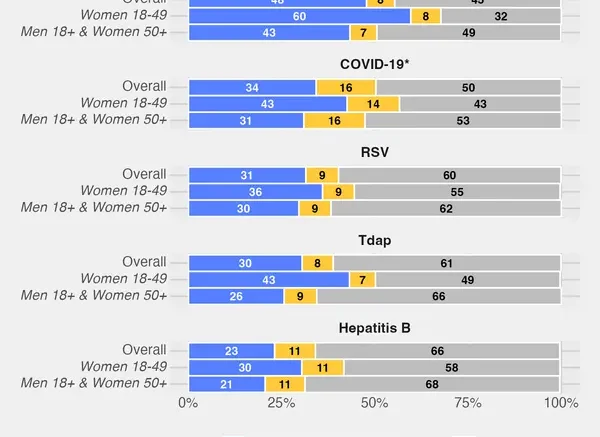
Almost half of those surveyed know that the CDC recommends getting the seasonal flu vaccine during pregnancy, while less than a third know that the CDC recommends the Tdap (tetanus, diphtheria, and pertussis), RSV (respiratory syncytial virus), and hepatitis B vaccines if one is not up to date on these vaccinations.
For the Covid-19 vaccine, over half of those surveyed do not know whether the CDC recommends it during pregnancy. While the CDC says that the vaccine helps reduce the risk for severe illness from Covid-19, it does not explicitly say the vaccine is recommended. Instead, the CDC says its Covid-19 vaccine recommendations are “now based on individual decision making, which emphasizes considering the benefits and risks of vaccination.”
Women of childbearing age (ages 18-49) are significantly more knowledgeable than other adult groups about most of the CDC’s pregnancy vaccine recommendations, although many in this group are also not sure what is recommended.
Uncertainty is a dominant finding in this survey. For each of four vaccines the CDC recommends during pregnancy, at least 45% of respondents are not sure whether the CDC recommends it.
The findings come from an APPC survey conducted on the research company SSRS’s Opinion Panel Omnibus platform among 1,031 U.S. adults from July 1-5, 2026. For further details, download the topline or see the end of this release.
“Our findings suggest that many Americans do not know which vaccines are recommended during pregnancy,” said Ken Winneg, APPC’s managing director of survey research. “The encouraging news is that relatively few people think that the CDC recommends vaccines that are not advised during pregnancy. The challenge is overcoming the widespread uncertainty over what the CDC does recommend.”
CDC recommendations during pregnancy
According to CDC guidance, four vaccines routinely recommended during pregnancy include:
Seasonal influenza vaccine during flu season.
Tdap vaccine during every pregnancy, preferably between 27 and 36 weeks’ gestation.
RSV vaccine during weeks 32-36, administered during RSV season, which is September through January in most of the continental United States. Additional doses are not recommended during subsequent pregnancies.
Hepatitis B vaccination for individuals who have not already been vaccinated.
The CDC says: “Covid-19 vaccination offers the greatest benefit if you are at higher risk for severe illness, including if you are pregnant. Pregnancy increases your risk of becoming very sick from Covid-19.” It adds that if you get sick with Covid-19 during pregnancy, you are at increased risk of complications that can affect your health and the health of your baby. The CDC recommends that Covid-19 vaccination decisions be made through individual decision making after considering the benefits and risks.
Other medical professionals more clearly back the Covid-19 vaccine during pregnancy. The American College of Obstetricians and Gynecologists (ACOG) strongly recommends that pregnant individuals be vaccinated against Covid-19 and “continues to recommend that all pregnant and lactating individuals receive an updated COVID-19 vaccine or ‘booster.’”
Awareness of recommended vaccines is low
Survey respondents were asked whether the CDC recommends each of eight vaccines during pregnancy. In addition to the five vaccines noted above, respondents were asked about three vaccines the CDC does not recommend during pregnancy: MMR or measles, mumps and rubella; chickenpox or varicella; and human papillomavirus or HPV.
Among U.S. adults overall, about a quarter to less than half of adults correctly identify any of the CDC-recommended vaccines, with the fewest (23%) knowing that the CDC recommends the hepatitis B vaccine during pregnancy and the most (48%) knowing the seasonal flu vaccine.
With the exception of RSV, women age 18 to 49 are significantly more likely than other groups (all adult men and women over 49 years old) to correctly identify all of the CDC-recommended vaccines. Among women 18 to 49, the vaccine least known to be recommended during pregnancy is the hepatitis B vaccine (30%) and the most known is the seasonal flu vaccine (60%).
Uncertainty dominates
For most of the vaccines, the most common response to whether the CDC recommends it during pregnancy is “not sure.” For each of the four recommended vaccines and the Covid-19 vaccine, from 45% to 66% of the overall adult population was not sure whether these were recommended. Among women of childbearing age, from 32% to 58% were not sure for each of the vaccines.
Few incorrectly think non-recommended vaccines should be taken
Current CDC guidance advises against administering the MMR and chickenpox vaccines during pregnancy because they are live-virus vaccines. The MMR and chickenpox vaccines should be given only before or after pregnancy. HPV vaccination is not recommended during pregnancy and should be delayed until after pregnancy if needed.
The survey found that relatively small groups of people incorrectly think that CDC recommends these vaccines:
21% say the CDC recommends the MMR vaccine during pregnancy.
17% say the CDC recommends human papillomavirus (HPV) vaccination.
17% say the CDC recommends chickenpox (varicella) vaccination.
Women of childbearing age are no more likely than others to incorrectly identify these vaccines as recommended. For the HPV vaccine, for example, 20% of women 18-49 years old incorrectly say it is recommended during pregnancy, compared with 16% of others, which is not a statistically significant difference.
For all three of these vaccines, the bigger issue is that a majority of respondents are not sure whether the CDC recommends that they should or should not be taken during pregnancy.
“Many Americans routinely get their immunizations from their primary healthcare providers or at local pharmacies, said Patrick E. Jamieson, director of APPC’s Annenberg Health and Risk Communication Institute, which oversees the health surveys. “It is critical that those professionals pay special attention to vaccine recommendations for recipients who are pregnant.”
Survey methodology
The data reported here come from a survey conducted for the Annenberg Public Policy Center by SSRS, an independent research company. The findings come from a nationally representative probability sample drawn from SSRS’s Opinion Panel, conducted July 1-5, 2026, among 1,031 U.S. adults. It has a margin of sampling error of ± 3.4 percentage points at the 95% confidence level. All figures are rounded to the nearest whole number and may not add to 100%. Combined subcategories may not add to totals in the topline and text due to rounding.
Source: Annenberg Public Policy Center (APPC) of the University of Pennsylvania
Why Taking a Sick Day Depends on More Than Being Sick
July 1, 2026
People may be too sick to work, but their job is too insecure to stay home. New research led by the University of Technology Sydney (UTS) shows the decision is heavily influenced by pay, job security and gender.
The study, published in Applied Economics, examines how workers’ health and economic circumstances dictate how many sick days they actually take.
“Employers and policymakers often focus on reducing absence, but workers who attend while unwell may recover more slowly, spread infection to colleagues, and be less productive,” said lead researcher Dr. Nancy Kong, a senior research fellow at the UTS Centre for Health Economics Research & Evaluation.
Drawing on data from the Household, Income and Labor Dynamics in Australia (HILDA) survey from more than 15,000 Australians between 2005 and 2016, Kong and her co-authors, Dr. David Rowell from the University of Queensland and professor Peter Zweifel from the University of Zurich, examined patterns of sick leave across the workforce.
“We focused on this period to avoid the COVID years, when major changes in public health rules, workplace practices and leave policies occurred at the same time, and could have blurred the relationship between job conditions and sick leave,” said Kong.
The study revealed a clear divide: workers in casual and fixed term jobs take only around one day of sick leave a year on average, compared with about four days for permanent employees.
Even accounting for variables such as occupation, job satisfaction, household circumstances, living arrangements, marital status, education and place of residence, non-permanent workers still take around three fewer sick days each year.
“This does not necessarily mean casual and fixed-term workers are healthier,” said Kong. “A more likely explanation is that taking time off is riskier when work is insecure. Non-permanent workers may have less access to paid sick leave. They may also worry that saying no to work, even when ill, could affect future hours or their chances of keeping their job. For a permanent employee, staying home with influenza might be inconvenient; but for a casual worker it may trigger financial stress.”
The study also found that economic insecurity plays a role, with workers living in areas with higher unemployment tending to take less sick leave.
For instance, when the local unemployment rate rises by five percentage points, sick leave drops. While this amounts to a fraction of a day per individual, across a standard team this adds up to significant forgone recovery time.
This pattern is consistent with a simple concern: when jobs feel harder to replace, workers may be less willing to take time off.
“They may worry that being absent could make them seem less reliable or increase the risk of losing work,” said Kong.
The effect of wages proved more nuanced. Higher wages alone did not consistently dictate leave behavior. However, among workers in poorer health, higher wages were strongly associated with taking more sick leave, suggesting higher income earners possess a financial buffer.
“Higher-paid workers generally have workplace support and leave entitlements that mean they are supported to take time off when they are unwell without fear of a potential financial penalty,” said Kong.
The most consistent finding was a distinct gender gap. Across every analysis, men take fewer sick days than women, averaging about half a day less per year (a 23% difference), even when matching with similar health and job circumstances.
“This may reflect differences in health needs, caring responsibilities or how likely people are to seek medical care,” Kong said. “But it also points to workplace cultures and gender expectations about ‘toughness’, reliability and working through illness.”
Ultimately, the study highlights that sick leave rates are not simply a reflection of physical health. For employers, low sick leave rates should not be automatically viewed as a sign of success; they may also indicate a culture of fear.
“Workplace cultures should not reward people for attending when unwell or treat legitimate sick leave as a lack of commitment,” said Kong. “Reducing stigma is also particularly important in addressing the gender gap.”
Kong said for policymakers, the study points to the importance of secure work, accessible paid leave and workplace practices that support people to recover when unwell. This is particularly relevant during periods of increased cost-of-living pressure, workforce shortages and seasonal illness. “A fair and effective sick leave system should support productivity while ensuring workers do not have to choose between protecting their health and protecting their income.”
Source: University of Technology Sydney
Estimated Effectiveness of 2024-2025 COVID-19 Vaccines in Adults
June 15, 2026
Vaccine effectiveness (VE) estimates are needed to monitor the effect of updated COVID-19 vaccinations, say Wiegand, et al. (2026) who sought to assess the effectiveness of 2024-2025 COVID-19 vaccines against medically attended COVID-19 among adults 18 years and older in the U.S. This case-control study with a test-negative design included patient encounters with a COVID-19–like illness discharge diagnosis code and a molecular or antigen SARS-CoV-2 test within 10 days before to 3 days after the encounter date, from Sept. 5, 2024, to Sept. 2, 2025. Encounters were captured in VISION (Virtual SARS-CoV-2, Influenza, and Other Respiratory Viruses Network), a multisite, electronic medical record–based network of health care systems, including 381 emergency department/urgent care (ED/UC) departments and 246 hospitals in six states.
In 333,262 eligible ED/UC encounters (median [IQR] age of patients, 54 [35-72] years; 60% female) and 97,663 eligible hospitalizations among immunocompetent adults 18 years and older (median [IQR] age of patients, 72 [59-81] years; 53% female), estimated VE was 26% (95% CI, 23%-29%) against COVID-19–associated ED/UC encounters, 35% (95% CI, 30%-40%) against COVID-19–associated hospitalization, and 41% (95% CI, 28%-51%) against COVID-19–associated critical illness 7 to 299 days after vaccination. Among immunocompetent adults 65 years and older (122 663 ED/UC encounters and 63 958 hospitalizations), estimated VE was 26% (95% CI, 22%-30%) against COVID-19–associated ED/UC encounters, 35% (95% CI, 29%-40%) against COVID-19–associated hospitalization, and 41% (95% CI, 28%-52%) against COVID-19–associated critical illness 7 to 299 days after vaccination. Among 32,629 hospitalizations in immunocompromised adults 18 years and older, estimated VE against COVID-19–associated hospitalization was 24% (95% CI, 13%-34%). VE estimates waned with more time since vaccination.
In this test-negative case-control study, 2024-2025 COVID-19 vaccination was associated with reduced likelihood of medically attended COVID-19–associated outcomes among immunocompetent and immunocompromised adults, highlighting the importance of adults receiving recommended COVID-19 vaccinations.
Reference: Wiegand RE, et al. Estimated Effectiveness of 2024-2025 COVID-19 Vaccines in Adults JAMA Intern Med. Published Online: June 15, 2026. doi: 10.1001/jamainternmed.2026.1936
Testing AI Against Public Health’s Existing Tools
June 8, 2026
A new University of Pennsylvania-led randomized controlled trial has found that AI-powered chatbots can make vaccine-hesitant parents more likely to say they will immunize their children against human papillomavirus (HPV), but no more than standard written public health materials.
The findings raise questions about when, how and to what extent AI enhances public health communications. “Comparing a chatbot to nothing isn’t really a fair test. The interesting question is whether it does better than what public health agencies already have out there. In our study, it didn’t,” says Sharath Chandra Guntuku, research associate professor in computer and information science (CIS) and the study’s senior author.
Described in a new paper in JAMA Network Open, the trial — which included nearly 1,300 participants in the United States, the United Kingdom and Canada — found that skeptical parents who interacted with the chatbots were more likely than those who received no intervention to say they intended to immunize their children.
But spending a few minutes reading standard written materials provided online about the benefits of the HPV vaccine from governmental health agencies like the Centers for Disease Control and Prevention (CDC) produced essentially the same effect.
“It would have been easy to compare an AI chatbot with no intervention or a very weak control condition and find a positive result,” says Neil Sehgal, a doctoral student in CIS and the study’s first author. “But we wanted to know whether the chatbot added value beyond what public health agencies already provide.”
As chatbots have become more powerful and widely used, researchers around the world have begun to explore the extent to which AI can change people’s minds, a question made all the more urgent by the rising tide of vaccine hesitancy.
Two years ago, one study found that an AI-powered chatbot could reduce beliefs in conspiracy theories. Last year, a randomized controlled trial in China found that giving parents access to a chatbot improved the odds that they either vaccinated their daughters against HPV or scheduled an appointment to do so.
But the designs of those studies and others like them often make it difficult to assess the effectiveness of the chatbots. In the Chinese study, for instance, two weeks of access to the chatbot was compared with no intervention, making it unclear if other persuasive content, like standard public health materials, would have had a similar effect.
“What is new here is the comparison against a strong, realistic control,” says Alison M. Buttenheim, professor of nursing and health policy in family and community health and a co-author of the study.
In contrast, the Penn team set strict guidelines to make the chatbot as comparable as possible with existing public health materials, and to assess its effects over time: participants assigned to the chatbot or written materials groups were exposed to each for the same minimum time of 3 minutes, and all participants were assessed for their intention to vaccinate their children 15 and 45 days after the interventions.
Under these stricter conditions, the innovative features of the chatbots — including their ability to converse with parents in real time — essentially provided no additional benefit, even though parents spent more time engaging with the chatbots than the written materials.
“While chatbot conversations can move intentions immediately,” says Lyle Ungar, Professor in CIS and a co-author of the study, “their advantage disappeared when compared with well-designed public health materials and did not persist over time.”
Indeed, at 45 days, participants who had been assigned to read the public health materials expressed a higher intent to vaccinate their children than either those who interacted with the chatbots or received no intervention.
“AI chatbots are promising, but they should not be assumed to outperform existing tools simply because they are newer or more interactive,” adds Guntuku. “A short read of a CDC webpage held up at least as well as a chatbot conversation, and the effect actually lasted longer.”
The researchers caution that the minimum exposure time to each intervention may overstate the real-world strength of such written public health materials. “Would all HPV-vaccine-hesitant parents choose to spend a full 3 minutes on the CDC webpage?” asks Sehgal. “Maybe, maybe not; chatbots are certainly more interactive.”
In the end, none of the interventions — neither the written materials nor the chatbots — increased the share of parents who said their children had actually received the HPV vaccine within the 45-day window of the study, underscoring the challenge of addressing vaccine hesitancy.
It’s possible, the researchers say, that the study was simply too short and the interventions too focused on communication, rather than structural barriers to medical care like time, money and access to a pediatrician, for participants to vaccinate their children in greater numbers.
“Vaccination is more than a communication problem,” says Buttenheim. “Even if the interventions changed some parents’ minds, it takes a lot to convert intention into action.”
Next, the researchers hope to test the use of AI in more complex scenarios, where chatbots function less as one-off conversational partners than medical concierges, helping schedule appointments, send reminders and liaise with clinicians. “A chatbot might be more useful if it’s paired with other functions,” notes Ungar.
The Penn team is also extending this work to global health settings, including studies of AI-supported vaccine communication in Nigeria. The goal is to understand how chatbot interventions can be adapted to local contexts rather than simply exported from studies conducted in the United States, the United Kingdom and Canada. “For AI tools to be useful in public health, they have to be evaluated in the communities where they might actually be deployed,” says Sehgal. “That means working with partners to understand concerns, language, trust and access, not just translating a chatbot prompt.”
Ultimately, the researchers hope their work encourages a more evidence-based approach to using AI for public health. “We need to evaluate AI tools against realistic alternatives,” says Guntuku. “It’s time to shift the conversation from, ‘Can AI persuade people?’ to more granular questions, like ‘When does AI add meaningful value, for whom and under what conditions?’”
This study was conducted at the University of Pennsylvania’s School of Engineering and Applied Science (Penn Engineering), School of Nursing (Penn Nursing), Leonard Davis Institute of Health Economics (LDI), Perelman School of Medicine (PSOM), Center for Health Incentives and Behavioral Economics and the Annenberg School for Communication (ASC), and was supported by the Penn Medical Communication Research Institute, Penn Global Research and Engagement Fund and the National Institutes of Health (NIH-NIMHD:R01MD018340, NIH-NIMH:R01MH132401 and NIH-NCI:R37CA259210).
Additional co-authors include Sunny Rai of Penn Engineering and LDI; Manuel Tonneau of Oxford, the World Bank and NYU; Anish Agarwal of PSOM; Joseph Cappella of LDI and ASC; and Melanie Kornides of LDI and Penn Nursing.
Source: University of Pennsylvania