

Transmission Precautions & Cleaning/Disinfection
Improving Non-terminal Disinfection May Reduce Contamination, but Optimizing Routine Environmental Cleaning Practices is Key
Aug. 20, 2026
Warren and Anderson (2026) reviewed evidence describing continuous and enhanced daily disinfection strategies aimed at reducing environmental contamination during active patient care.
Continuous disinfection technologies, including light-based systems and low-level chemical dispersal, demonstrate antimicrobial activity under controlled conditions but have shown inconsistent effectiveness in clinical environments. In contrast, enhanced daily disinfection strategies, such as electrostatic sprayers and disinfectants with residual activity, improve disinfectant delivery and may reduce environmental bioburden. Residual disinfectants have demonstrated sustained antimicrobial effects and reduced contamination in randomized clinical studies. However, evidence across studies remains heterogeneous, with limited randomized controlled trials and frequent reliance on bioburden as a proxy outcome.
The researchers concluded that improving non-terminal disinfection may reduce contamination, but optimizing routine environmental cleaning practices remains the most effective and immediately actionable strategy.
Reference: Warren BG and Anderson DJ. Continuous and enhanced daily disinfection strategies to reduce environmental contamination in healthcare settings. Am J Infect Control. 2026 Sep;54(9S):S101-S104. doi: 10.1016/j.ajic.2026.05.009. PMID: 42556924 DOI: 10.1016/j.ajic.2026.05.009
Daily Pillow-Cover Replacement May Reduce CRAB Cross-transmission in the ICU
Courtesy of ronnarong, licensed via Adobe Stock
March 19, 2026
Critically ill patients in intensive care units (ICUs) are at risk for colonization and infection by carbapenem-resistant Acinetobacter baumannii (CRAB), a multidrug-resistant pathogen with high mortality. Despite the use of infection control bundles, CRAB often persists on environmental surfaces, posing ongoing challenges for containment. The potential impact of managing soft environmental reservoirs—such as pillow covers—remains underexplored. This study by Suh, et al. (2026) evaluated whether daily pillow cover replacement can reduce CRAB acquisition in a medical ICU (ICU).
A prospective intervention study was conducted in a 23-bed MICU at a tertiary hospital in Korea between August 2023 and July, 2024. Standard infection prevention and control (IPC) practices, including hand hygiene, cohort isolation, chlorhexidine bathing, and routine cleaning, were consistent throughout the study. Starting February 1, 2024, pillow covers were replaced regularly as an additional intervention. CRAB acquisition was defined as positive clinical cultures obtained > 48 h after admission. Incidence rates were compared between the pre- and post-intervention periods using Poisson regression and interrupted time series analyses.
A total of 152 patients met the inclusion criteria (108 pre- and 44 post-intervention). In this study, 224 CRAB-positive clinical specimens were identified from 152 patients, and only the first isolate per patient was included in the incidence analysis. The mean age was 76 years; 59.9% were male, and the average MICU stay was 26 days. Sputum accounted for 76.8% of CRAB-positive specimens. Compliance with daily pillow cover replacement was 100%. Poisson regression revealed a significant reduction in CRAB incidence following the intervention, with a 3.92% weekly decrease (95% CI 0.10–7.69%; p = 0.045).
When integrated into existing IPC bundles, daily pillow-cover replacement may reduce CRAB cross-transmission in the ICU. This simple, low-cost intervention with high compliance offers a promising strategy for improving environmental hygiene and infection control in high-risk settings.
Reference: Suh, J., Yang, K., Kim, J. et al. Effect of daily pillow cover replacement on the incidence of carbapenem resistant Acinetobacter baumannii (CRAB) in the medical intensive care units (MICU): a comparative study. Antimicrob Resist Infect Control (2026). https://doi.org/10.1186/s13756-026-01732-9
Local Translation of National Guidance on Discontinuing COVID-19 Isolation Into Policies Resulted in Considerable Differences Among Hospitals
Courtesy of kornnphoto, licensed via Adobe Stock
December 29, 2025
The COVID-19 pandemic underscored the vital role of infection prevention and control (IPC) policies in hospitals to protect patients and healthcare workers, with national guidance documents traditionally providing a framework for local IPC policy development. This study by Haanappel, et al. (2025) aimed to examine the translation of the Dutch national COVID-19 IPC guidance documents into local Dutch hospital policies, specifically focusing on discontinuing isolation measures for COVID-19 patients.
This multicenter retrospective study investigated the IPC policies of seven Dutch hospitals, of which three academic hospitals and four non-academic hospitals. IPC practitioners collected data from hospitals’ (archived) IPC policy guidelines implemented between March 2020 and December 2021. A composite index based on the criteria for discontinuation of isolation measures for COVID-19 patients was created to capture variation in policy translation within and across hospitals over time, relative to the national guidance document. Using this index, a descriptive analysis was performed to assess the extent to which hospitals adopted the national guidance for discontinuing isolation measures for specific patient groups.
The national COVID-19 IPC guidance document for discontinuing isolation measures established targeted criteria for six patient groups, and included criteria based upon days since symptom onset, symptoms, symptom-free period, and RT-PCR results. Hospitals distinguished 16 patient groups. While the national guidance was updated regularly, the criteria for discontinuing isolation measures changed once; the frequency of local hospital updates ranged from four to 12 times. Policy variation was observed both within and across local hospital policies over time. Local hospital policies tended to be less strict for patients on ventilation and/or with a tracheostomy (78% of the time), while for other patient groups, they were more often stricter.
Compared to the national guidance, local hospital guidelines showed more variety in the number of patient groups described as well as more policy changes throughout the first two years of the pandemic. Furthermore, variation was observed within and between hospitals over time. These variations show the complexity of striving for a uniform and unambiguous policy on a national level, and indicate the need for awareness of the presence of variation in settings regarding patient groups and infrastructure.
Reference: Haanappel CP, et al. Local translation of national guidance on discontinuing COVID-19 isolation into hospital policies results in considerable differences. Antimicrobial Resistance & Infection Control. Published Dec. 29, 2025. Volume 14, article number 153, (2025)
Study Increases Understanding of How Airborne-communicable Diseases Travel

The green plume represents the aerosol plume coming from a model human walking in a line. Courtesy of Lou et al., 10.1126/sciadv.adw0985
August 8, 2025
We all remember the advice frequently repeated during the COVID pandemic: maintain six feet of distance from every other human when waiting in a line to avoid transmitting the virus. The advice did not take into account the complicated fluid dynamics governing how the airborne particles actually travel through the air if people are also walking and stopping. Now, a team of researchers led by two undergraduate physics majors at the University of Massachusetts Amherst has modeled how aerosol plumes spread when people are waiting and walking in a line.
The results, published recently in Science Advances, grew out of a question that many of us may have asked ourselves when standing in marked locations six-feet apart while waiting for a vaccine, to pay for groceries or to get a cup of coffee: what’s the science behind six-feet of separation? If you are a physicist, you might even have asked yourself, “what is happening physically to the aerosol plumes we’re all breathing out while waiting in a line, and is the six-foot guideline the best way to design a queue?”
To find answers to these questions, two talented UMass Amherst undergrads, Ruixi Lou and Milo Van Mooy, took the lead.
“We wanted to know how the aerosols we breathe out are transported, but it turns out this is very difficult to do in a real waiting line,” says Lou, who is now a graduate student at the University of Chicago.
The ideal situation would be to have real humans standing in a real, moving line to test how their exhalations travel—a far-too risky proposition. Instead, Lou and Van Mooy decided to 3D-print a set of cylinders and human-shaped models and put them on a conveyor belt to see how the plumes moved. Their models “exhaled” colored dyes mimicking sneezes, coughs and regular breathing. They also ran computer simulations in collaboration with the group of Rodolfo Ostilla at the University of Cadiz, in Spain.
“What we found was really surprising,” says Van Mooy.
Since warm air rises, there is a slight updraft surrounding our bodies—and so the team expected to see the aerosol plumes rising. But instead, they observed a “downwash” effect, where the simple act of walking and waiting in a line caused the plumes to sink. Even more surprising was that, if the ambient temperature is close to our body temperature, as would be the case in a non-air-conditioned room in summer, those aerosols could be pushed toward the floor due to air currents. However, in a climate-controlled room, the difference in temperature between what we exhale and the ambient conditions are enough to drive those plumes aloft. If the temperature is in an intermediate range, it is quite possible that the aerosols can hover at just the right height for the next person in the line to inhale them as the line moves forward.
“Ultimately, there are no hard-and-fast rules about social distancing that will keep us safe or unsafe,” says senior author Varghese Mathai, assistant professor of physics at UMass Amherst. “The fluid dynamics of air are marvelously complex and general intuition often misleads, even for something as simple as standing in a line. We need to take space and time into account as we come up with our public health guidelines.”
Source: University of Massachusetts Amherst
Assessment of the Risk of Aerosol Transmission of CRKP During Bronchoscopy in the ICU
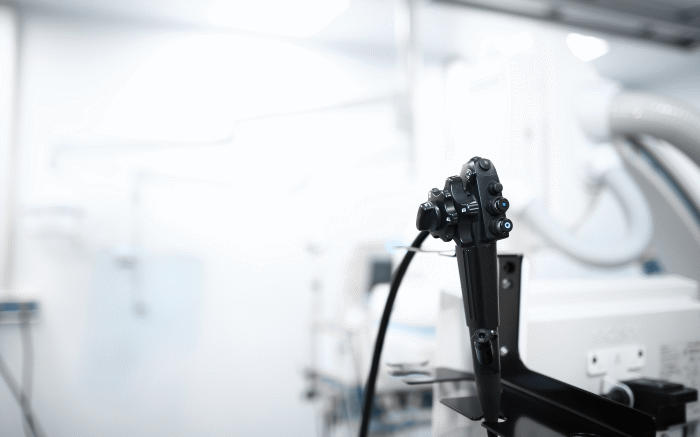
Licensed via Adobe Stock
July 14, 2025
The potential for aerosol generation during bronchoscopy to facilitate the transmission of multidrug-resistant bacteria remains incompletely understood. This study by Yang, et al. (2025) aimed to assess the risk of carbapenem-resistant Klebsiella pneumoniae (CRKP) transmission via aerosols during bronchoscopy in an intensive care unit (ICU).
The researchers collected eight samples from the ICU of a tertiary general hospital, including bronchoalveolar lavage fluid (BALF) samples from one patient with community-acquired pneumonia and one patient with hospital-acquired CRKP infection, as well as air samples collected at 1, 2, and 3 meters from the patients’ bedsides. The gene sequences of the isolates were determined using Sanger sequencing, and the sequence type (ST) of the strains was identified through multi-locus sequence typing (MLST). Phylogenetic and evolutionary analyses were performed using the MEGA program to construct maximum likelihood trees.
All samples tested positive for CRKP, with consistent antibiotic susceptibility profiles showing resistance to first-line antibiotics commonly used in clinical practice. All isolates were identified as ST11-type CRKP, and phylogenetic analysis revealed high homology among the eight CRKP isolates.
This study demonstrates that CRKP can be transmitted through aerosols up to 3 meters during bronchoscopy in the ICU, leading to hospital-acquired infections in patients in adjacent beds. These findings underscore the need for enhanced infection control measures during aerosol-generating procedures in high-risk settings.
Reference: Yang J, et al. Assessment of the risk of aerosol transmission of CRKP during bronchoscopy in the intensive care unit. Antimicrobial Resistance & Infection Control volume 14, Article number: 81 (2025)
Investigators Examine Bodily Waste Management and Related Hygiene Practices in Nursing Homes

Licensed via Adobe Stock
March 27, 2025
Bodily waste management is a critical yet frequently neglected domain of infection prevention and control, say Glampedakis, et al. (2025) who conducted a survey to examine various aspects of bodily waste management and related hygiene practices in nursing homes based on existing recommendations.
All nursing homes (NH) (n = 120) of canton Vaud in Switzerland were invited to participate in this cross-sectional survey between July 2022 and February 2023 using a questionnaire. Eighty-seven NHs participated in the survey (72.5%). Of these, 33% had internal protocols on bodily waste management, 98% had at least a dirty utility room (median: 4 per NH) and all a bedpan washer-disinfector (WD), yet only 66% met the cantonal recommendation of bedpan WD density (1/15 beds). Separation of soiled and clean compartments was present in 51%, complete hand hygiene supplies in 73% and personal protective equipment (PPE) in 30% of utility rooms. Fifty-four percent of NHs reported having a lid for each bedpan. Systematic use of lids was reported in 33% of institutions and of gloves in 98%, for the transport of used bodily waste collection tools. All surveyed institutions reported performing automated reprocessing of bodily waste collection tools in bedpan WDs and use of manual pre-cleaning was anecdotal. Regular maintenance and validation of bedpan WDs was present in almost all participating NHs.
Identified actionable priorities include making bodily waste management protocols accessible to staff, delineation of clean and soiled compartments in utility rooms and equipping them with PPE and hand hygiene supplies, as well as educating healthcare workers on best practices for the transport and disposal of bodily waste.
Source: Glampedakis E, et al. Bodily waste management and related hygiene practices in nursing homes of Vaud: findings from a multicentre cross-sectional survey as a basis for targeted interventions. Antimicrobial Resistance & Infection Control. Volume 14, article number 20 (2025).