
2024 editions of healthcare hygiene magazine
Explore the December 2024 Edition
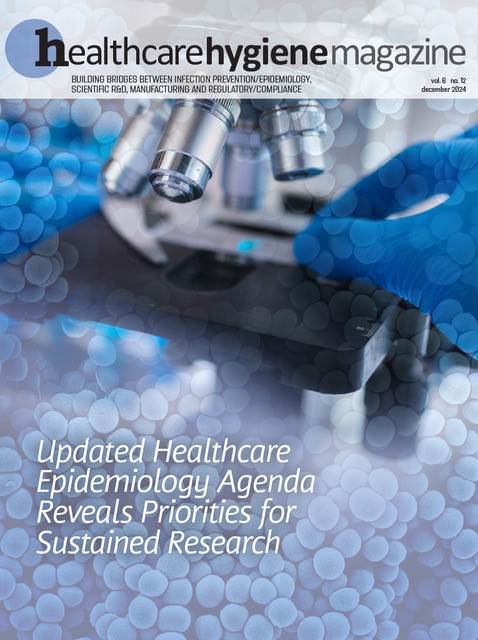
While it can take as many as 17 years for research to be accepted and implemented, it is essential for the infection prevention and healthcare epidemiology community to have a relevant, timely and forward-thinking roadmap to follow as clinical knowledge evolves and is applied at the bedside.
An updated research agenda which addresses the evolving landscape of healthcare epidemiology as well as tackles the gaps in knowledge was recently issued by the Society for Healthcare Epidemiology of America (SHEA)’s research committee. Their goal was to identify high-priority research topics and make recommendations to advance the field of healthcare epidemiology.
Explore the November 2024 Edition
More than four decades ago, the CDC’s Study on the Efficacy of Nosocomial Infection Control (SENIC) established a connection between elements of infection control programs and provided strong evidence that hospitals with more staffing and more intense infection control processes had lower rates of healthcare-associated infections (HAIs). SENIC suggested a staffing ratio of infection control professionals to inpatient beds, expressed as infection prevention full-time equivalents (IP-FTEs).

Explore the October 2024 Edition
While the gift of being able to divine the future may be reserved for a few notable individuals such as Nostradamus, in more modern times, surveying experts and extrapolating the results may be the closest we can get to having a magic crystal ball. That’s exactly what a small group of medical professionals has done to get a feel for where the infection prevention & control (IP&C) sector is headed by the year 2030.

Explore the September 2024 Edition
In her presentation at the national APIC meeting this past June, Catherine Kroll, MPH, CIC, system director for infection prevention at PeaceHealth, assured infection preventionists that they could navigate the legal system successfully – with a little help from colleagues in risk management and their own legal counsel.
During her talk, “Raise Your Right Hand: Role of Infection Prevention in Healthcare Litigation,” Kroll asked APIC attendees by a show of hands to indicate if they had ever helped with a request for production, prepared interrogatories, been deposed, or served as a witness during the litigation process, Kroll says she found the results to be quite illuminating.

Explore the August 2024 Edition
Experts address infection prevention and control risks when animals visit healthcare settings and provide strategies for navigating our furry friends’ time with patients.

Explore the July 2024 Edition
+ What’s New and Notable in IP&C Practice Guidance
In a presentation at the annual conference of the Association for Professionals in Infection Control and Epidemiology (APIC), Bethany Phillips, MLS(ASCP)CM, MPH, CIC, HACP-IC, FAPIC, and Jennifer A. Ormsby, DNP, RN, CPN, CIC, CPNP-PC, explained the role of APIC’s Practice Guidance Committee (PGC) and provided an overview of its priorities for the year.

Explore the June 2024 Edition
In the 1950s, when mathematician and computer scientist Alan Turing posed the question, “Could a man-made device act and make decisions indistinguishable from those of humans?” he essentially launched the beginnings of a field of study that eventually became known as machine learning that produces artificial intelligence (AI). The implications for the infection prevention and control (IP&C) sector have yet to be fully actualized and comprehended, but experts say it is already revolutionizing healthcare delivery.

Explore the May 2024 Edition
One of the widely recommended, but deceptively difficult strategies for improvement and pervasive problems that seem to resist solution is hand hygiene compliance. While it plays a significant role in breaking the chain of infection, hand hygiene is a venerated strategy that can sometimes be protected from scrutiny and untouchable from the perspective of determining if certain aspects still hold up over time or still make sense for evolving real-world conditions and challenges in the healthcare environment.

Explore the April 2024 Edition
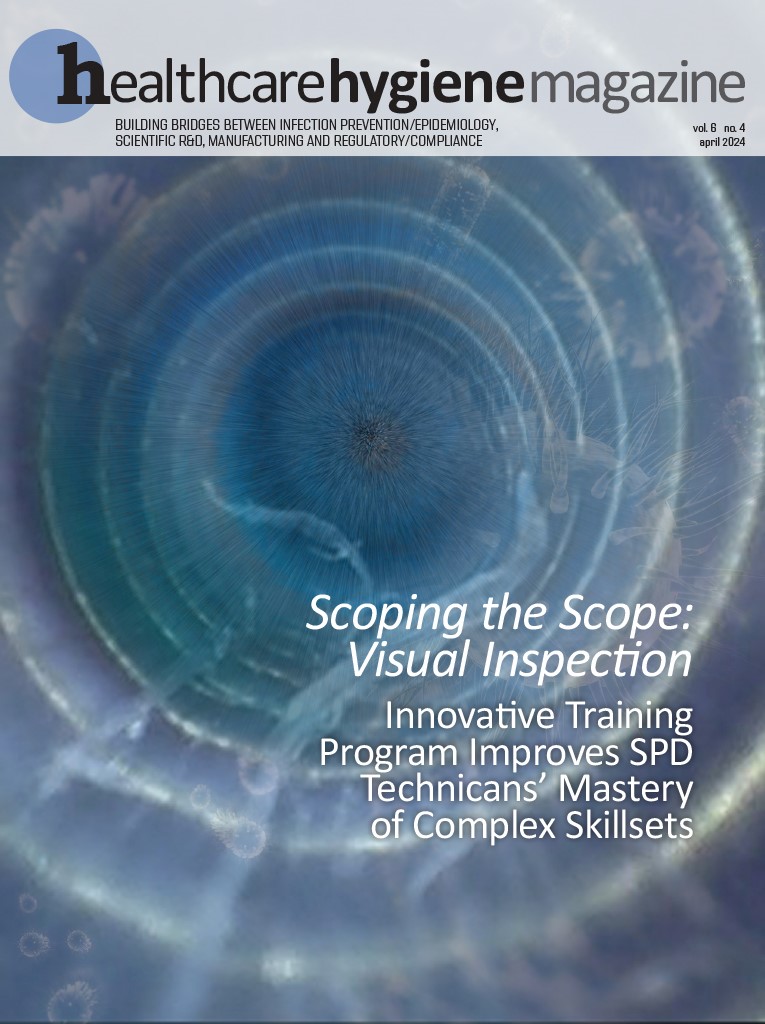
Hands-on learning has been found to be more effective than mere classroom instruction in many sectors, so it’s no surprise that researchers continue to see promising results among students who have the advantage of honing real-world skillsets. But it’s not often that a novel model for training sterile processing professionals accomplishes such an impressive success rate for its target learning objectives.
A recent pilot study conducted by Ofstead & Associates Inc. and underwritten by the Healthcare Sterile Processing Association (HSPA) Foundation documented that trainees’ test scores, scope-defect identification skills and competencies all improved significantly and confidence in their abilities remained high after training.
Explore the March 2024 Edition
While most infection prevention and control (IP&C)-related efforts target healthcare personnel, there is a new groundswell in the medical community supporting patient education around healthcare-acquired infections (HAIs) and the role they can take in advocating for their own health.
As Sharp, et al. (2014) observe, “Two deeply intertwined ethical considerations – patient autonomy and patient welfare – motivate the case for empowering patients for HAI prevention. Autonomy refers to persons’ ability to pursue their own life plan free from controlling, coercive or undue influence from others. Although a basic tenet of bioethics, promoting patient autonomy can seem an abstruse demand in the complex hospital environment. Hospitalized patients are often vulnerable, and vast asymmetries in medical knowledge exist between providers and patients. These conditions jeopardize the chances that patients’ values and interests will be adequately considered in healthcare decision-making. Actively empowering patients, ensuring them an opportunity to act considering their values and interests supports patient autonomy. Providing patients with information relevant to making important medical decisions is essential to this process.”

Explore the February 2024 Edition
Usability challenges with medical devices in the home as well as insufficient cleaning instructions for medical devices in the healthcare setting have topped the list of nonprofit patient safety organization ECRI’s annual detailing of the most pressing health technology safety hazards for 2024.
The report’s data are compiled from the independent medical device evaluations conducted by ECRI, which follows a rigorous review process to select topics, drawing insight from incident investigations, reporting databases, and independent medical device testing..
Explore the January 2024 Edition
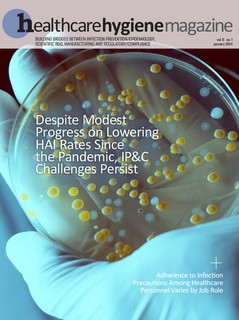
In the subsequent years since the COVID-19 pandemic first began, the rates of healthcare-acquired infections (HAIs) have fluctuated, due in part to the singular focus on SARS-CoV-2, but also because of waning complications of supply chain shortages that impacted personal protective equipment (PPE) and other supplies, compounded by staffing challenges, and then a resumed re-dedication to evidence-based infection prevention and control (IP&C) practices.